
Dr. Ruth Useem, back in the 1960s, while researching American families living in India, realized that the kids with American parents growing up in a different country were creating a culture unique to themselves – it was neither the culture of their parents home country, not the culture of their host country. Children whose parents come from two different cultures and immigrant children also follow a similar pattern where they create a more blended culture and define a new normal (Harrington, 2008. pg. 12).
Dr. Useem named the children of these phenomena, Third Culture Kids (TCKs) (Druart, 2016. Pg 22).
In the 1990s, sociologist, David C. Pollock, popularized the concept while working and researching The Transition Experience with missionary kids (VanReken, 2014). In creating a TCK profile, he used the definition, “A TCK is a person who has spent a significant part of his or her developmental years outside the parents’ culture. The TCK frequently builds relationships to all of the cultures, while not having full ownership in any. Although elements from each culture may be assimilated into the TCK’s life experience, the sense of belonging is in relationship, to others of similar background. (Arabadzhiev, 2017)”
Here’s how one TCK describes himself:
“I spent my teenage years in an international environment, where everyone was multi-cultural and bilingual, so to me that was the norm. I have friends who moved around their entire childhood, never having spent more than 2 years in a single country. When I read the definition, I thought the TCK concept was perhaps reserved for kids with traveling parents and expats. Throughout the years I discovered that TCKs are becoming more of a global phenomenon, as opposed to this narrower description of a specific group of people. (Arabadzhiev, 2017)”
Cultural and Social Barriers To Access Learning and Engage in Learning
As a product of high international mobility, TCKs are learning adaptability, to speak more than one language, are culturally and politically astute, are able to converse with adults, travel well, and often undergo reverse culture shock within their home country. (Lewis, n.d.).
However, Lijadi and Van Schalkwyk, found that the data gathered using the Collage Life Story Elicitation Technique (CLET), “contradicted, to a certain extent, the notion that TCKs were tolerant to diversity, sensitive and could serve as a model of multicultural education principles because of their expanded worldview and exposure to cultural differences.” They conclude that most TCKs found comfort in the familiar and associated with others who had undergone a similar experience. While some students showed some sense of connectedness to the host culture, others seemed to be more spectators of the new culture (Lijadi and van Schalkwyk, 2014).
In her doctoral dissertation, Simpson observes, “During their transitional period TCKs experience challenges that can affect academic, social, and emotional development. One challenge is trying to assimilate into the many. However, the sense of belonging is hard to achieve. Another challenge is establishing relationships with students who are not TCKs. Researchers noted that most find comfort in developing strong relationships among other TCKs (Simpson, 2017).”
Simpson also claims that the school and classroom environment can partner with parents to ensure the transitional phase allows TCKs to overcome some of the barriers. These transitions don’t usually come with a manual.
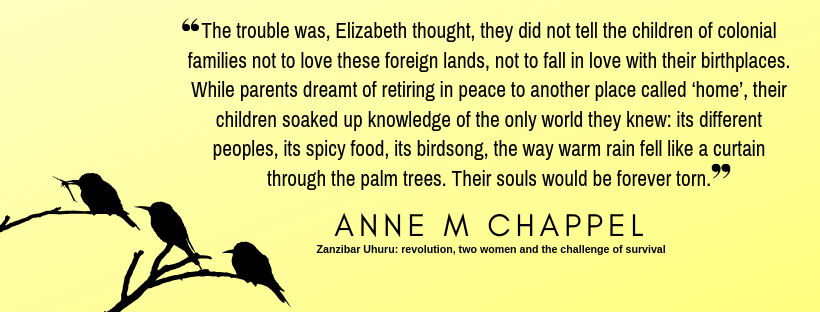
Speaking of immigrant children, Dr. Shenfield claims, “Unlike adults, young people are still in the process of forming their individual identities, and as such, being caught between two cultures can create numerous internal conflicts.” She advices caregivers to watch out for bullying and taking constructive steps to help TCKs assimilate with the local culture and people.
Conclusion
President Barak Obama was a noteworthy TCK, as a biracial child in Jakarta during his formative years, he speaks of not being able to identify with any one group or norm and struggled to define his identity. This is true for most TCKs.
Growing up as an Indian-American immigrant teen in the US and now raising my children in both US and India, we are often told we’re not American enough when we are in the US and not Indian enough when we are in India. However, my family would not trade the positive experiences we’ve shared with people in the various places we’ve lived in. Forming and maintaining relationships with people different from us is something that keeps us grounded and aware of our place in this globalized world.
REFERENCES:
Lijadi, A. and Van Schalkwyk, G. (2014, June 23). Narratives of Third Culture Kids: Commitment and Reticence in Social Relationships. The Qualitative Report. Vol 19.
Simpson, D.S. (2017, July). Third Culture Kid Identification and Transitional Programs, Best Practices for School Administrators and Educators. (Unpublished Doctoral Dissertation). Prescott Valley, Arizona.
Harrington, P (November 2008). The Negotiation of Identity in an International School Setting. International Schools Journal. Vol XXVIII (pg. 12 – 16).
Shenfielf, T. (2017, May). Understanding the Challenges Faced by Immigrant Children. Retrieved on 8/27/2019 from https://www.psy-ed.com/wpblog/challenges-faced-by-immigrant-children/
Druart, R. (2016). Where do I belong? Retrieved on 8/27/2019 from https://marymountlearningleadership.tumblr.com/post/144998171596/where-do-i-belong-third-culture-kids
Arabadzhiev, L. (2017, December 13). The Third Culture Generation. Retrieved on 8/27/2019 from https://blogs.ibo.org/blog/2017/12/13/the-third-culture-generation/
Lewis, L. (n.d.) Third Culture Kids. Retrieved on 8/27/2019 from http://wanjennifer.tripod.com/

